
The Hidden Power of “Amen"
Aug 12, 2026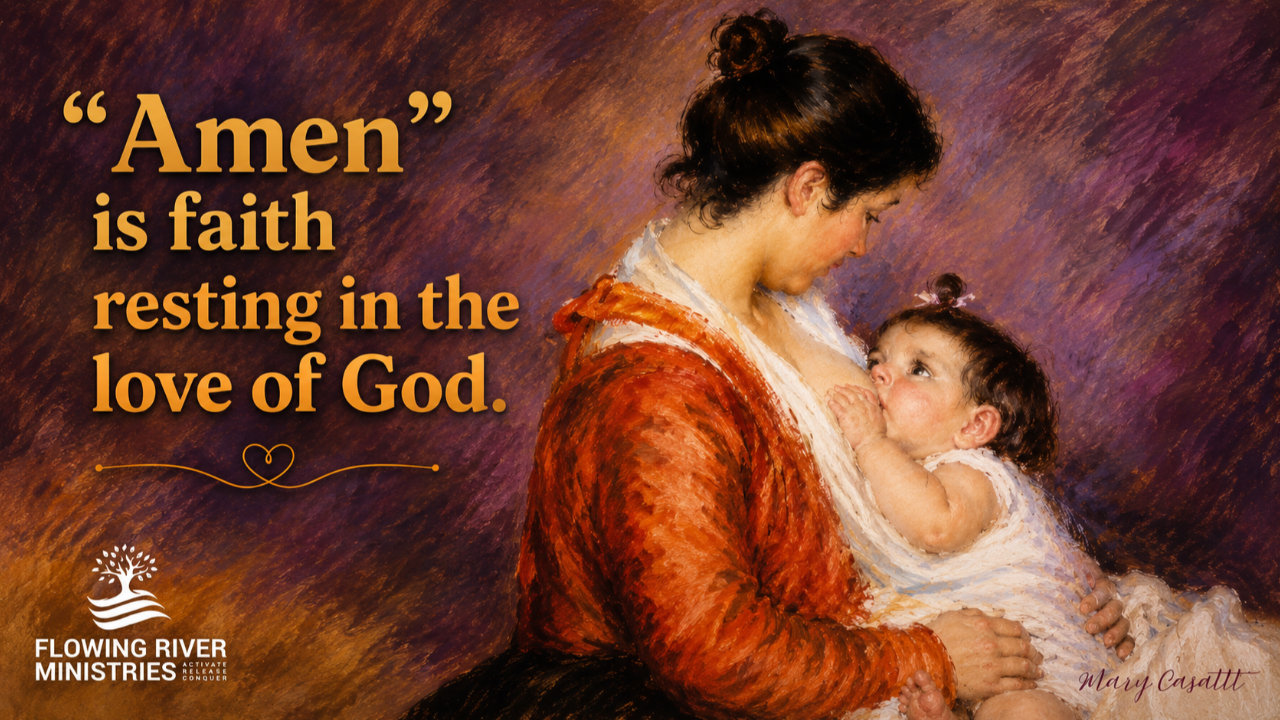
The Hidden Power of “Amen"
(3 min. read time)
Have you ever given much thought to the word amen? As Christians, we say it a lot. I even found myself saying it when I was having a conversation with my pest control guy about the tenacity of bugs. “Amen!” I reply, and I detected a slight roll of the eyes.
My goodness, do I even know what I’m saying?
Amen is actually a Hebrew transliteration. So we are speaking Hebrew every time we use the word. Even in the New Testament, the word amen is used, it is not from Greek; it’s Hebrew.
But what does it really mean? Is it more than something we tack on to the end of our prayers or a response to something said in a sermon?
We should use our amens with understanding and conviction. Amen is a sharp, two-edged sword in the hands of a believer. It will accomplish the will of God. It will bring heaven to earth.
I know those are strong statements, but let’s look at why I can say these things.
When Jesus said “amen,” He meant that whatever He was saying was absolutely certain and dependable. There were no “what ifs.” There were no mights or maybes. No hope so’s.
The origin of the word amen is rooted in aman and is often translated as “believe.” It means to be faithful, trustworthy, to lean in. It is also used to describe a nursing mother holding her infant. What a beautiful picture of absolute trust and reliance. The infant is leaning into another person’s strength. We see this in the life of Abraham.
Genesis 15:6 “And he believed in the LORD, and He accounted it to him for righteousness.”
The word believed is aman. Abraham “amened” the Lord.
He was resting as a nursing child rests on his mother’s breast soaking in her love, contented, with no other concerns.
Note the famous painting by Mary Cassatt above. This is a beautiful graphic illustration of amen. The mother is giving to her child from her own resources. Not goat or cow’s milk, but from her own sustenance. It is the ultimate reflection of trust and love. It shows a complete leaning and total reliance.
Amen also carries the idea that there is no other alternative. When we say “amen,” we are saying we agree. We are saying, “I trust explicitly. I am absolutely certain, and I can depend on the Lord for the righteous outcome.”
The word amen shares the same root letters as emunah, which means to believe and trust. There is power in saying “amen” with understanding. We are declaring that we will not be moved from what God has promised because His promises are unalterable and settled.
2 Corinthians 1:20 “For all the promises of God in Him are Yes, and in Him Amen, to the glory of God through us.”
God has given us many glorious and wonderful promises, and all of them are God’s “yes” to us. But there is a response required.
There must be an amen.
Not necessarily the literal saying of “amen,” but the action of amen must be resident in our hearts. We can say “amen” out loud all we want, but the real “amen” must already be decided in our hearts—trust. The devil knows when you mean it and he fears your conviction of faith. He fears the amen from your heart not the amen that is just a religious punctuation mark.
There must be absolute trust and certainty that the promise is a “yes.”
However, that certainty does not dictate how the promise will be fulfilled, only that it will be fulfilled. The way God chooses to manifest His promise is up to Him. We trust His wisdom.
We are certain He is GOOD and that He loves us.
When we say, “Amen,” may our hearts declare, “God is faithful, His Word is certain, and I will not be moved.”
*Final Fun Note
Rabbis teach that the Hebrew word amen is an acronym for the phrase El Melech Ne’eman, which translates to “God, the trustworthy King,” or “God is faithful.”
AMEN